


Wired Security System Installation: Avoiding 5 Costly Mistakes in Older Toronto Homes
The historic homes of the Greater Toronto Area (GTA), from the charming Victorians in The Beaches to the solid Edwardian houses in High Park, are highly valued for their character. But when it comes to installing a modern wired security system, that century-old charm presents serious challenges that a standard installer cannot address.
A wired security system installation in a pre-1950s property requires navigating original knob-and-tube wiring, brittle plaster, and hidden structural elements. If handled improperly, you risk not only a messy aesthetic but also costly electrical hazards and potential code violations.
This guide moves beyond generic "camera placement" tips. We reveal the five most common and costly mistakes made during wired security installation in older Toronto homes and how our specialized service guarantees a clean, reliable, and code-compliant result every time.
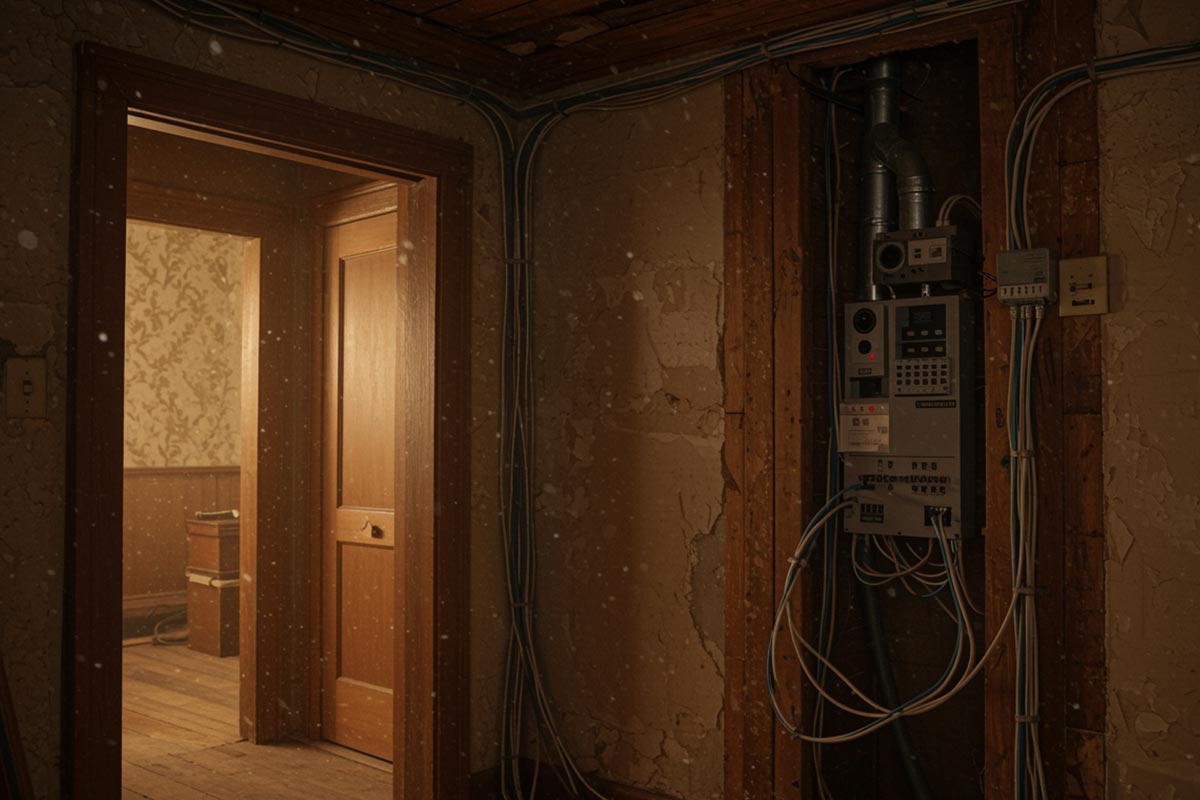
Mistake #1: Ignoring the Hidden Threat of Knob-and-Tube (K&T) Wiring
Toronto homes built before the 1950s often rely on K&T—an antiquated, two-wire electrical system that is sensitive and easily compromised. This is the most significant risk factor for any low-voltage security system installation in the area.
The Dual Danger of K&T for New Wiring
Critical Safety Concerns
System Interference: The original K&T wiring lacks shielding and grounding, meaning it can induce electronic noise into your new security cables. This leads to unreliable data transmission, video lag, and ghosting in your PoE security cameras, compromising the very quality you paid for.
Severe Fire Hazard: K&T was designed to dissipate heat into open air. When a new cable is carelessly bundled against K&T, or if insulation is added later, the K&T overheats. This is a notorious failure point and a major fire risk that your insurance company will heavily scrutinize.
The majority of electrical fires in older homes are the result of unauthorized, non-compliant additions to the original system, like new wires incorrectly spliced onto K&T.
Our professional installation process starts with a full inspection of your power lines. We strictly adhere to the Canadian Electrical Code (CEC) rules that mandate clear separation between high-voltage and low-voltage lines.
For homeowners in the GTA, this means every wire run must respect the 1.25 inch distance rule from the edge of the wood framing. If the cable must be routed closer, we install steel nail plates to protect it from future screws or dropped nails. This meticulous approach is the only way to guarantee your security system installation is safe, reliable, and compliant with current Ontario standards.
Mistake #2: Irreversible Damage to Plaster and Lath Walls
The integrity of a classic plaster and lath wall is often the first casualty of an amateur security installer. The hallmark of a poor installation in an old home is the messy, large, and uneven patch job left behind.
The Mechanical Flaw of Standard Drilling
Plaster is rigid and brittle. Standard drilling or cutting (as you would use on modern drywall) creates heavy vibration. When this vibration meets plaster and lath, it often fractures the plaster far beyond the intended cut-out area, creating widespread hairline cracks that quickly spread across the wall and ceiling. For homeowners who value their home's aesthetic, this structural damage is unacceptable.
The Low-Impact "Fish and Thread" Method
We eliminate large, visible damage by using a specialized, multi-stage approach refined for historic materials:
Our Professional Approach
- Vibration Mitigation: We utilize specialized, low-vibration hand tools and drill minimal pilot holes to map the exact wire path with precision
- Targeted Access: We strategically use existing structural voids (like behind baseboards, along window casings, or inside chimney chases) to "fish" the wires from the attic or basement, bypassing the need for invasive wall cuts
- Aesthetics and Finish: This non-destructive technique ensures the only evidence of the wire is the high-definition camera itself, preserving your home's aesthetic and eliminating the need for expensive plaster repairs
Mistake #3: Improperly Routing Cable in Finished Basements and Attics
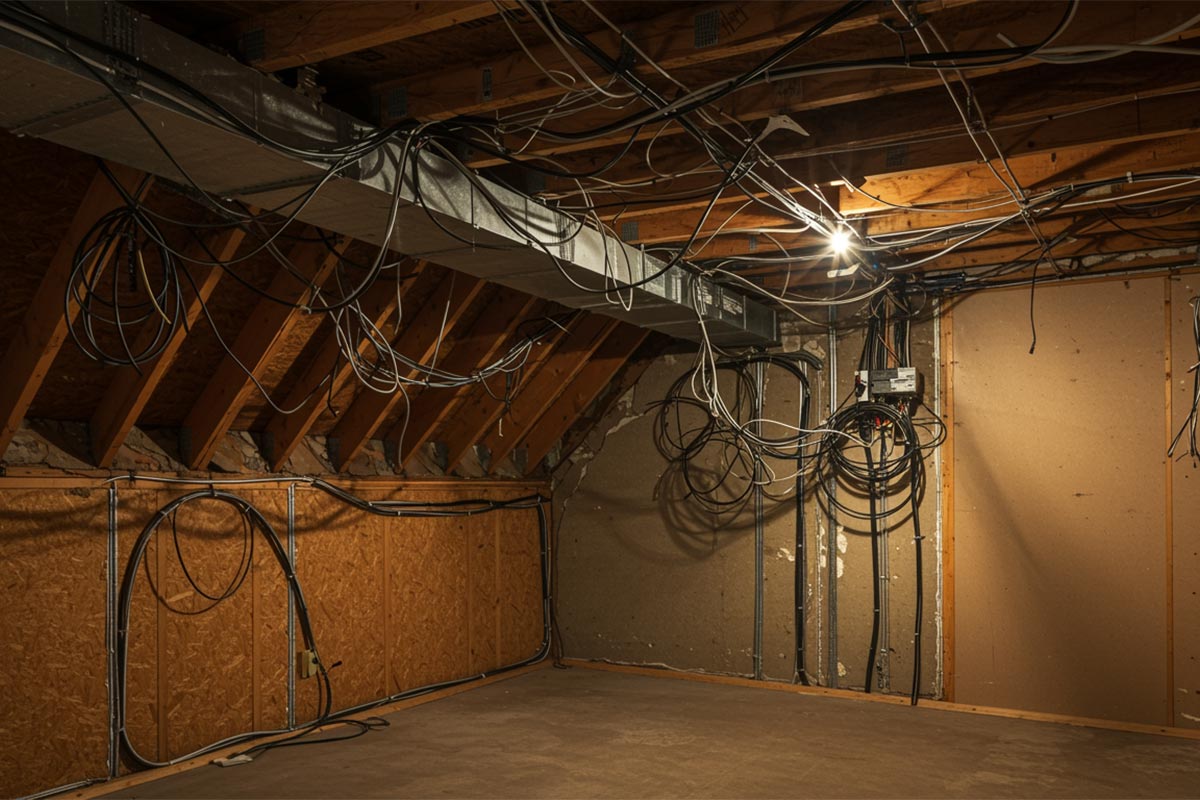
Many homeowners believe that because the security wire is "low voltage," they can run it haphazardly along heating ducts or staple it directly to joists in the basement. This is incorrect, dangerous, and unprofessional.
Code Violation: The Use of Air Chases
The CEC strictly prohibits running power or data cables through air ventilation ducts unless the cable is specifically plenum-rated. A common installation mistake is dropping the wire down a return air plenum or alongside a plumbing stack as a shortcut. This creates a potential fire hazard and violates code.
Joist Drilling and Protection
Our professional method for running cable through a finished basement or attic ensures safety and durability:
Code-Compliant Installation
- Precise Drilling: We drill holes dead-center through joists, away from the edges, to maintain structural integrity
- Protection: All cables that cross a joist or are run near the edge of wood framing are shielded with steel nail plates to prevent damage from future renovations
- Future-Proof: A reliable security system is one that can't be accidentally damaged by a future plumber, electrician, or DIY project
Mistake #4: The Insurance Trap—Ignoring ULC Certification
A security system installation in the GTA is not complete unless it provides the highest level of trust and financial benefit.
The ULC Compliance Requirement
ULC (Underwriters Laboratories of Canada) Certification is the gold standard for alarm monitoring services. Many Canadian insurance companies, particularly for high-value homes in areas like Vaughan and Mississauga, require ULC-certified systems and monitoring to provide full coverage and, crucially, to qualify for the maximum insurance premium discounts (often up to 20%).
Beyond the Discount
The benefit of ULC monitoring is not just the cost savings. It proves that:
ULC Certification Benefits
- 24/7 Monitoring Standards: Your central monitoring station adheres to the highest standards for staffing, power supplies, and response times
- Annual Inspection: Your entire alarm system is subject to annual inspection and audit by a certified technician, ensuring continuous compliance and functionality
- Insurance Coverage: If your chosen installer is not a ULC-listed alarm company, your system may not meet the terms required by your insurance policy, leaving you vulnerable during a claim
Mistake #5: Failure to Match Modern Equipment to Old Infrastructure
The final mistake is assuming any wired system will work. The best contemporary systems are designed to integrate complex signals over a wired backbone.
Wired Reliability: DSC Neo vs. Qolsys IQ Pro
For older homes, hybrid systems offer the best solution. The DSC PowerSeries Neo, while hardwired, is highly reliable and easily partitioned. However, the newest solution, the IQ Pro (a combination of DSC Neo and the Qolsys IQ Panel 4), allows you to utilize existing hardwired zones while adding modern features like encrypted PowerG wireless sensors to areas where wiring is impossible (e.g., a finished sunroom).
Modern System Features
- Dual-Path Communication: Simultaneous LTE and Wi-Fi/Ethernet communication to prevent signal loss during power outages
- Future-Proofing: Compatibility with smart home automation and high-resolution PoE security cameras
- Hybrid Flexibility: Combine hardwired reliability with wireless convenience where needed
By choosing a professional installer who works with both complex hardwired equipment (DSC Neo) and modern hybrid systems (IQ Pro), you ensure your security investment is protected for decades.
Conclusion: Don't Risk Your Home's Value—Hire the GTA Specialist
Installing a wired security system in an older Toronto home is a job of finesse, safety, and code compliance, not just brute force. It requires deep expertise in both low-voltage security wiring and the unique structures of pre-1950s GTA properties.
Don't risk damaging your home's plaster or creating fire hazards with a general contractor. Choose the specialist who respects your property's history and guarantees a clean, reliable, and code-compliant installation.
Ready to protect your valuable Toronto property with an installation that respects its integrity? Contact Alarm Dealers today for a free, no-obligation assessment and quote on your stress-free wired security system installation in Toronto and the GTA (Mississauga, Vaughan, Richmond Hill, etc.).