


ULC Certified Monitoring vs. Self-Monitoring: Which is Safer for Your GTA Home?
The moment you install a home alarm system, you face the single biggest decision: how will it be monitored?
On one side, you have the low cost and perceived control of self-monitoring (relying on smartphone alerts). On the other, you have the guaranteed, human-backed response of professional alarm monitoring, often meeting the gold standard of ULC certification.
In the Greater Toronto Area (GTA), where property values are high and insurance needs are complex, choosing the wrong option can be a critical mistake. This comprehensive guide, written by your local security experts, cuts through the sales pitch to show you which choice truly protects your family, your assets, and your finances.
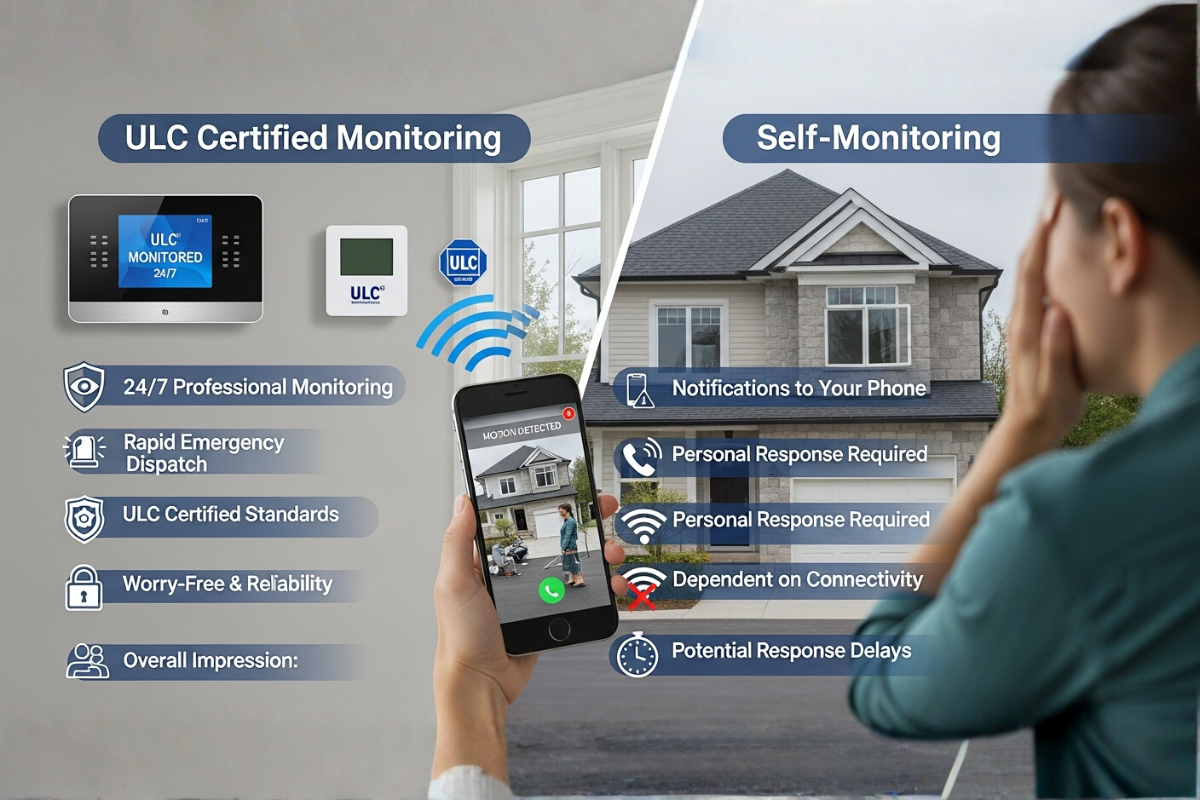
The Low-Cost Appeal: Understanding Self-Monitoring Security
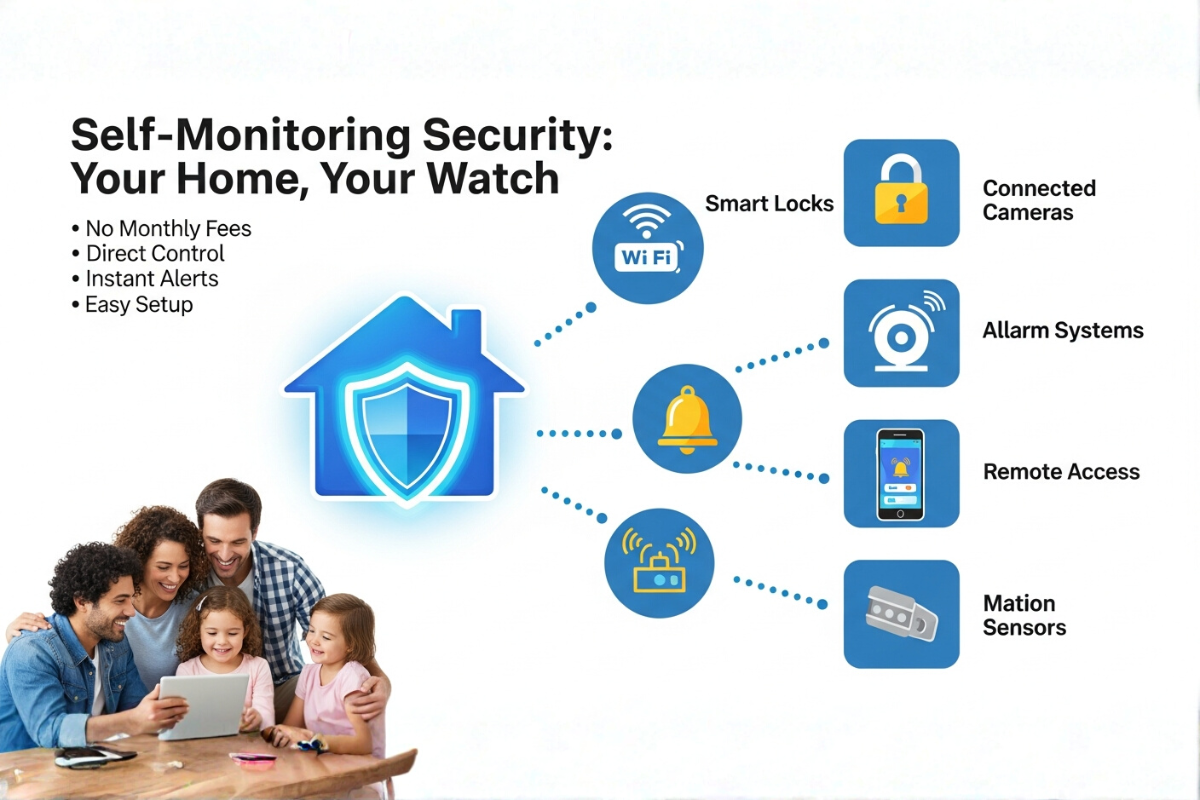
Self-monitoring is simple: when an alarm triggers, your smartphone, and perhaps the phones of a few family members, receive an immediate push notification or text message. You are the emergency responder.
The Appeal of Self-Monitoring
Self-Monitoring Benefits
- Low Monthly Cost: Self-monitoring is typically free, but if you include video cloud storage or app fees, it can cost between $5 to $20 CAD per month.
- Full Control: You decide what constitutes an emergency and when to call 911. You are in complete charge of the situation and the response.
The Critical Risk: The Single Point of Failure
The major drawback of self-monitoring security is that it relies entirely on the homeowner's immediate availability and clear judgment—the human factor.
Sleeping or in Transit
Phone is Dead or Out of Range
The Emergency Response
If your property is empty, or you are simply busy, self-monitoring is a single point of failure that compromises the entire purpose of having a security system.
The Standard of Trust: Defining Professional ULC Certified Monitoring
Professional alarm monitoring means your system is linked to a 24/7 central station staffed by trained operators. When an alarm triggers, the operator immediately verifies the threat and dispatches the correct authorities (Police, Fire, EMS).
What is ULC Certification, and Why Does it Matter in Ontario?
ULC stands for Underwriters Laboratories of Canada. ULC is an independent, non-profit certification organization that ensures security products and services meet the highest national standards for safety and reliability.
ULC Certification Ensures
- Guaranteed Redundancy: The central monitoring station operates with redundant power supplies, backup communication lines, and strict protocols. The station cannot go down.
- Training and Speed: Operators are highly trained to quickly assess alarm signals, verify threats, and follow established dispatch protocols, ensuring a rapid response time.
- Compliance: ULC standards, specifically CAN/ULC-S561, are the recognized benchmark for reliability across Canada, setting a baseline far above basic self-monitoring services.
In the GTA, where many homes have high value and complex insurance policies, the ULC factor establishes maximum authority and trustworthiness. It shows you're not just buying a product; you're buying a service that has been vetted against national standards. This fact is your strongest argument against low-cost, unverified competition.
Real-Life Examples: The Moment Monitoring Matters
To truly appreciate the value, consider these two real-life scenarios that illustrate the critical difference between the two monitoring types:
Case 1: The Burst Pipe (Self-Monitoring Failure)
The Incident: A homeowner in Vaughan was on a flight to the Caribbean during the December cold snap. A freeze sensor in the basement detected a temperature drop caused by a burst pipe.
Self-Monitoring Outcome: The homeowner's phone was in airplane mode. The alarm company's notification went missing for 12 hours. When they landed and finally saw the alert, the basement was flooded, resulting in $40,000 in damage and a complex insurance claim. The system worked, but the monitoring failed.
Case 2: The Fire Verification (ULC Success)
- The Incident: An elderly couple in a multi-story home in Mississauga accidentally burned toast, triggering the hardwired smoke detectors.
- ULC Monitoring Outcome: The central station received the fire signal instantly. Following protocol, the operator immediately called the house to verify. Upon hearing the homeowner confirm it was a false alarm, the operator cancelled the fire dispatch within 30 seconds. The homeowner avoided a high-stress emergency response, preventing police/fire dispatch time wastage, and most importantly, they avoided a municipal fine. The rapid response time and verification saved time and money.

Total System Reliability: Beyond the Alarm
The decision isn't just about the monitoring service; it's about the entire system's reliability. ULC-certified monitoring works best with reliable, professional-grade equipment that is tailored to your unique space.
Low Maintenance: A Core Hardwired Advantage
A major hidden cost of self-monitoring security is the constant time and expense spent on maintenance. A hardwired alarm system simplifies this dramatically.
Unlike wireless systems where you have dozens of sensors demanding battery changes every 6-18 months, hardwired systems require minimal ongoing maintenance. The primary task is an occasional check of the system's main backup battery (usually replaced every 3-5 years) and cleaning of sensors. Wireless systems, conversely, require constant battery checks and replacement for every single sensor (motion, door, window, smoke), which translates to high ongoing maintenance effort and cost.
System Customization and Unique Layouts
A core advantage of choosing a professional hardwired installer is unlimited customization. DIY wireless systems force you to work within their pre-set limitations (range, device count). A professionally designed system, using a robust hardwired panel (like DSC Neo or IQ Pro), allows for complete flexibility:
Professional Customization Benefits
- Customized Coverage: Your system can be zoned specifically for unique home layouts common in the GTA, such as walk-out basements, detached garages, or complex additions. Professional planning ensures every critical area gets the exact type of sensor it needs, leading to more accurate threat detection.
- Hybrid Compatibility: Furthermore, high-end hardwired panels like the DSC PowerSeries Neo can be configured as a hybrid system. This means that existing wireless devices (like compatible Z-Wave smart locks or high-quality PowerG sensors) can be integrated seamlessly, allowing you to upgrade reliability without forcing you to replace every single smart device you already own.
Control Panel
Life Safety Sensors
Video Integration

The Financial Reality: Insurance Discounts and Liability
The decision between ULC certified monitoring and self-monitoring is not just about safety; it is a major factor in your long-term financial liability and savings.
Mistake: Missing the 15-20% Insurance Discount
Insurance companies universally recognize that ULC certified alarm monitoring dramatically reduces the risk of loss due to fire, theft, and environmental damage (like flooding).
Insurance Savings
- Savings: Most Canadian insurance providers offer a significant 15% to 20% discount on your homeowner's insurance premium if you have a monitored alarm system that meets their specifications (often requiring ULC compliance). This often translates to savings of $150 to $300 CAD per year for an average GTA home policy.
- Net Cost: When you calculate the savings over a few years, the cost of professional alarm monitoring often pays for itself, making the initial monthly fee a net zero or even a net positive investment. Self-monitoring security rarely qualifies for this maximum discount.
The Cost of False Alarms and Liability
In cities across the GTA (including Toronto, Peel Region, and York Region), police services enforce municipal bylaws that charge homeowners for excessive false alarms.
By choosing ULC certified monitoring, you transfer the legal and financial liability of the initial verification and dispatch protocol to the professional central station, preventing costly fines.
Investment in Protection: Cost and Installation Process
While the upfront cost of a hardwired system is higher than a DIY kit, the value is in the system's longevity and professional execution.
Investment Details
- Cost: While every project is unique, most professional hardwired alarm systems installed in a standard three-bedroom GTA home, including the main panel, cellular backup, and basic sensors, typically range from $1,200 to $3,500 CAD for the initial equipment and installation fee, plus the monthly monitoring cost. This initial investment quickly pays off through insurance discounts and vastly reduced maintenance costs.
- Process: How disruptive is the installation process, and how long does it usually take? Professional installers use specialized techniques (like cable fishing) to minimize disruption, especially in finished GTA homes. A standard installation of a main panel and basic sensors usually takes one full day (6-8 hours). Our process is planned meticulously to ensure minimal intrusion while achieving maximum wiring concealment.
Conclusion: Choosing Safety Over Simplicity
For homes in the GTA, where security is a high priority and insurance compliance is essential, the choice is clear:
Self-monitoring security is a tempting budget option that relies on luck and availability. It is a system that works, but it's a monitoring plan that often fails.
ULC Certified Monitoring is a tested, reliable, protocol-driven service. It's an investment in guaranteed rapid response time, financial security via insurance discounts, and the peace of mind that a human being is watching your property 24/7.
Don't compromise your family's safety or risk a major insurance loss to save a few dollars a month. Contact our ULC Certified specialists today for an assessment and a quote on a reliable, professionally monitored alarm system for your Ontario home!