

Security Cameras 101: Types, Technology, and How They Work (2026 Guide)
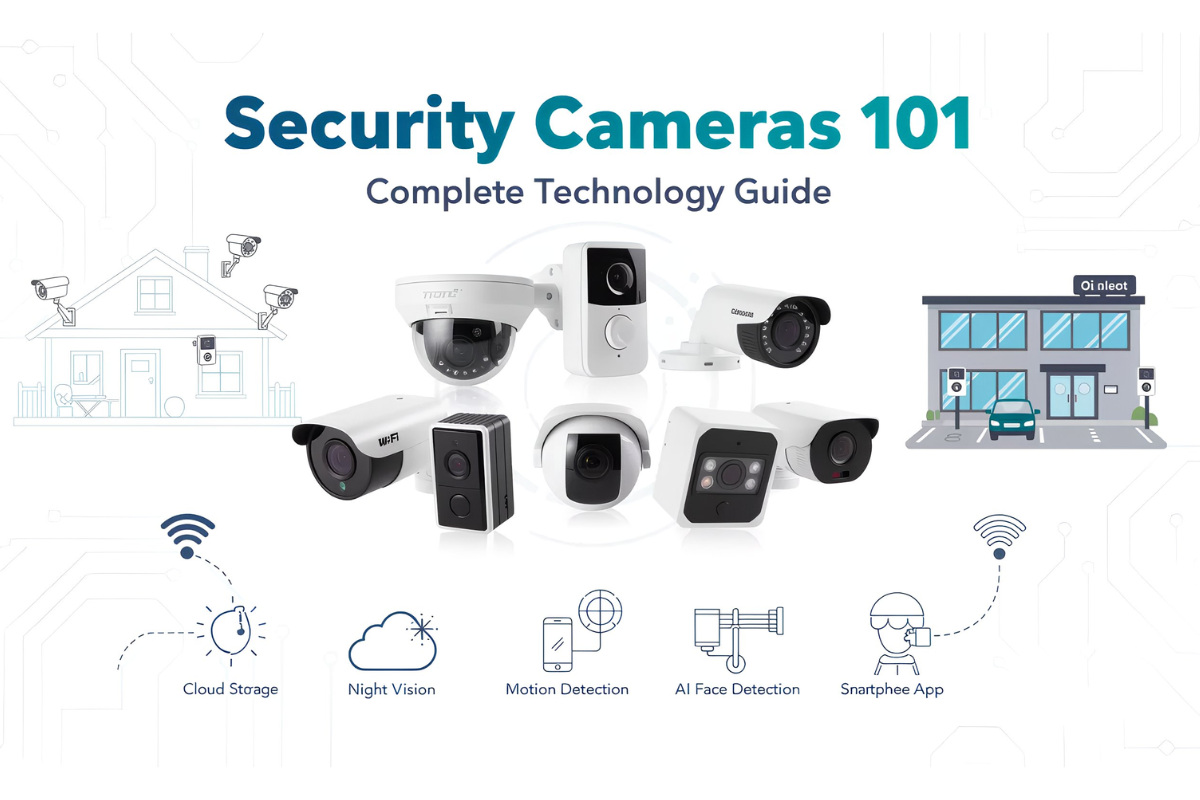
In 2026, security cameras are the "eyes" of your home. They have evolved from simple recording devices into intelligent sensors that can tell the difference between a falling leaf and a suspicious person. This guide breaks down exactly what they are and which type is right for your Canadian home.
What is a Security Camera?
At its core, a security camera is a video capture device designed to monitor and record activity in a specific area. Unlike a regular camera, it is built for continuous operation and remote viewing. In 2026, these devices use advanced image sensors to provide 24/7 visibility, even in total darkness.
The Main Types of Security Cameras
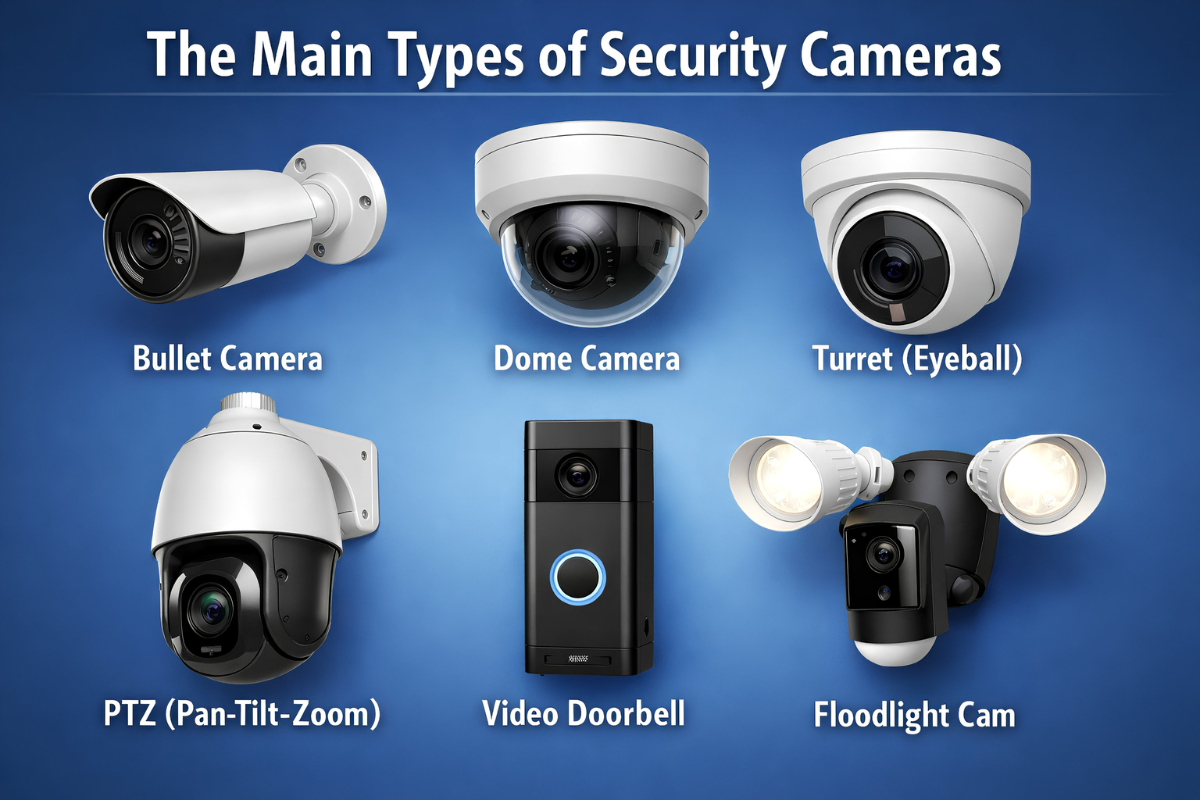
Choosing the right camera body is about more than just aesthetics; it determines the camera's field of view, its durability, and how well it deters intruders. Here are the primary types used in Canadian residential and commercial setups.
| Camera Type | Best For | Key Feature |
|---|---|---|
| Bullet Camera | Driveways & Long Perimeters | Long-range viewing & visible deterrent |
| Dome Camera | Porches & Entrances | Vandal-resistant glass & discreet look |
| Turret (Eyeball) | General Outdoor Use | Best night vision & easy to adjust |
| PTZ (Pan-Tilt-Zoom) | Large Backyards / Commercial | Rotates 360° and zooms in on targets |
| Video Doorbell | Front Door / Packages | Two-way talk and visitor verification |
| Floodlight Cam | Alleys & Dark Corners | Massive LED lights that trigger on motion |
Bullet Cameras: The Visual Deterrent
Bullet cameras are the most recognizable type of security hardware, named for their cylindrical, "lipstick" shape. They are designed to stand out, sending a clear message to anyone approaching your property that they are being watched. Because of their shape, they can house larger lenses, making them ideal for long-range viewing down driveways or along the sides of large Canadian estates.
Dome Cameras: Built for Durability
Dome cameras are encased in a hardened, transparent plastic shell that makes them incredibly difficult to tamper with or redirect. This "vandal-proof" design is perfect for low-hanging areas like porches or soffits where an intruder might try to hit or cover the lens. Additionally, the dark tint often used on the dome makes it nearly impossible for someone to tell exactly which direction the camera is pointing.
Turret (Eyeball) Cameras: The Professional Choice
Turret cameras, often called "eyeball" cameras, feature a ball-and-socket design that allows for precise positioning during installation. Unlike dome cameras, they do not have a glass housing over the lens, which completely eliminates the "IR glare" or reflections often seen in night vision footage. They are currently the favorite for Canadian installers due to their superior image clarity in the dark and ease of maintenance.
How Do Security Cameras Actually Work?
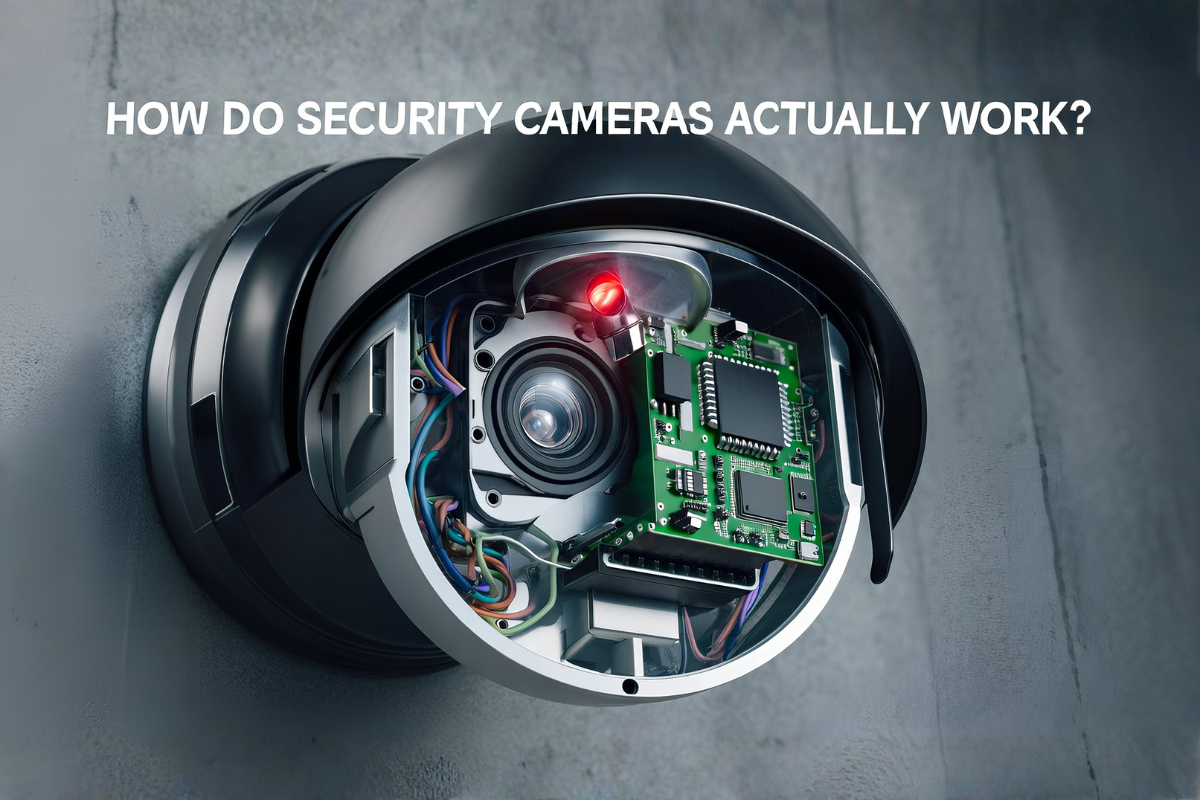
The journey from a person walking onto your porch to an alert appearing on your phone involves four critical stages. In 2026, the "Intelligence" of the camera is what separates a professional system from a cheap toy.
1. Capture & Image Sensing
The process starts when light passes through the camera lens and hits the image sensor (usually a CMOS sensor in 2026). This sensor converts photons into electrical signals. For Canadian homes, we prioritize 8MP (4K) sensors, which provide enough pixel density to zoom in on a face or a license plate from 50 feet away without the image becoming a "pixelated mess."
2. AI Analysis (Edge Computing)
Once the image is captured, the camera's internal processor runs AI algorithms to determine what is happening in the frame. This is called "Edge Computing" because the thinking happens on the camera rather than in the cloud. The system can distinguish between a swaying tree branch and a human intruder, which reduces false alarm notifications by over 90% compared to older motion-detection technology.
3. Data Transmission
The analyzed video must then be sent to your viewing device.
Transmission Methods
- PoE (Power over Ethernet): This is the gold standard for 2026. A single Cat6 cable carries both the power to run the camera and the data to stream the video. It is unhackable from the outside and works perfectly in -40°C weather.
- Wi-Fi 6/7: Wireless cameras are easier to install but depend on your home's router strength. In Canada, thick brick walls and insulation can often block these signals, making wired connections the preferred choice for outdoor security.
4. Storage & Retrieval
Finally, the footage is saved for future evidence. Most professional Canadian setups use a Network Video Recorder (NVR), which is a dedicated hard drive kept inside your home. This ensures that even if your internet goes down, your cameras continue to record 24/7. Cloud storage is a popular secondary backup, allowing you to access clips instantly from your smartphone app anywhere in the world.
The "Canadian Shield" Check: Weather & Durability
When selecting a camera for a Canadian environment, you must look beyond the resolution. The "IP Rating" (Ingress Protection) tells you how well the camera will survive our seasons. An IP67 rating is mandatory; it means the camera is completely dust-tight and can survive being submerged in a meter of water—or more realistically, a massive snowbank during a blizzard.
Temperature Requirements
Always verify the Operating Temperature range. Many "smart home" cameras sold in the US are only rated for -10°C, meaning they will shut down during a standard January night in the Prairies or Ontario. Professional grade gear from Alarm Dealer is rated for -40°C to +50°C, ensuring that your home remains protected even in the most extreme "Polar Vortex" conditions.