


PoE vs. WiFi vs. Wireless Security Cameras: Which is Best for You in 2026?
Choosing a security system in 2026 can feel like navigating a technical maze. With terms like "PoE," "Wireless," and "Wire-less" being used interchangeably, many Canadians end up buying a system that doesn't actually fit their property's needs.
Are you looking for a simple DIY project for a small apartment, or a rock-solid surveillance network for a large estate? The best camera depends entirely on how much cable you're willing to run and how much you trust your home's WiFi.
In this guide, we strip away the marketing jargon and compare the three heavyweights of 2026 security technology.
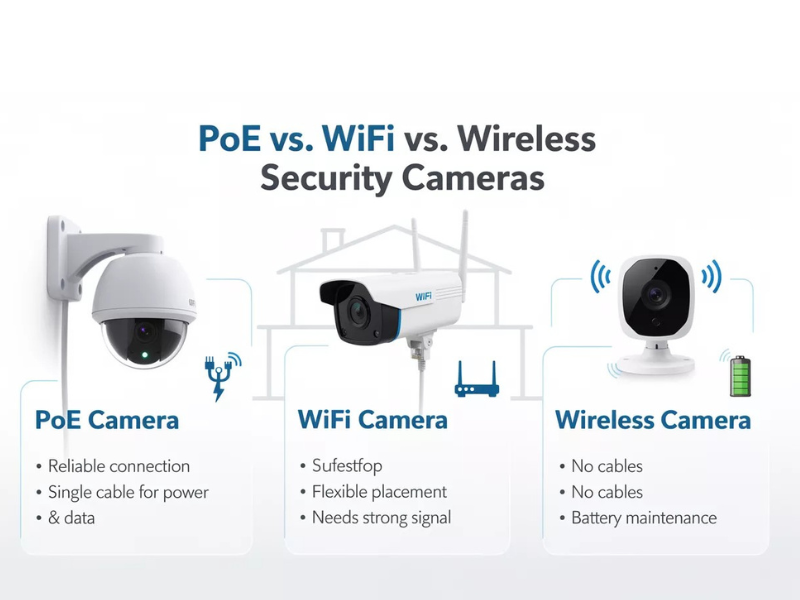
1. PoE (Power over Ethernet) Cameras
The Gold Standard for Professionals
PoE cameras are the backbone of serious security. They use a single Ethernet cable (Cat5e or Cat6) to provide both power and high-speed data.
- How it works: Each camera plugs into a centralized PoE Switch or NVR (Network Video Recorder)
- The Big Win: Because the connection is physical, it is immune to WiFi signal drops, microwave interference, or "jamming" by tech-savvy intruders
- Best For: 24/7 continuous recording, 4K/8K resolutions, and properties where reliability is non-negotiable
2. WiFi Cameras (Plug-in Wireless)
The Middle Ground of Convenience
Often called Wireless, these cameras transmit video over your WiFi network but still require a physical power cable plugged into an electrical outlet.
- How it works: The camera talks to your router wirelessly but relies on a standard AC adapter for power
- The Big Win: You avoid the difficulty of running Ethernet cables through your entire house, but you never have to worry about changing batteries
- Best For: Renters or homeowners who want high-quality video (2K/4K) without the complexity of a hardwired network
3. Wireless Cameras (Battery/Solar)
The Ultimate in Placement Freedom
"Wire-Free" cameras are 100% cable-independent. They run on rechargeable batteries or small solar panels and transmit video via WiFi.
- How it works: The camera remains in sleep mode until it detects motion, saving battery life
- The Big Win: You can mount them anywhere on a tree, a fence, or a detached garage without a single wire
- Best For: Low traffic areas, temporary setups, and spots where running power is physically impossible
Comparison Table: 2026 Quick Snapshot
| Feature | PoE (Hardwired) | WiFi (Plug-in) | Wire-Free (Battery) |
|---|---|---|---|
| Reliability | 99.9% (Wired) | Variable (WiFi-dependent) | Variable (WiFi + Battery) |
| Recording Mode | 24/7 Continuous | 24/7 or Motion-only | Motion-only |
| Installation | Professional/Advanced DIY | Easy DIY | Instant DIY |
| Video Quality | Up to 4K/8K (No lag) | High (Potential lag) | High (Battery optimized) |
| Power Source | Ethernet Cable | Wall Outlet | Battery / Solar |
The 2026 Bandwidth Gap
A major point often ignored by big-brand blogs is Network Congestion. In 2026, our homes are crowded with smart TVs, consoles, and IoT devices. If you install five 4K WiFi cameras, they can consume up to 20-30% of your total bandwidth, leading to lag in your security feed and buffering on your Netflix.
The Solution
If you need more than three cameras, PoE is the superior choice. It keeps your security traffic on its own "private highway," ensuring your home WiFi stays fast for your family while your cameras record in crystal-clear detail.
Choose the Right Security System in 2026
The legal and technical landscape of home security in 2026 is complex, but protecting your property shouldn't be a gamble. By choosing the right balance of reliability and convenience, you ensure your family stays safe without the technical headaches.
At Alarm Dealer, we specialize in designing custom systems that fit your specific needs and budget.
Contact Us for Professional Consultation