


The Ultimate Guide to Home Alarm Systems in Canada (2026 Edition)
Home security in Canada has reached a turning point in 2026. We are no longer just installing "burglar alarms" that beep when a door opens; we are deploying intelligent life-safety ecosystems. With the rise of sophisticated property crimes in urban centers like the GTA, Vancouver, and Calgary and new provincial safety mandates, homeowners need a system that is proactive rather than reactive.
Whether you are protecting a high-value estate in Oakville or a modern condo in downtown Montreal, this guide provides the technical depth and legal clarity you need to make an informed decision.
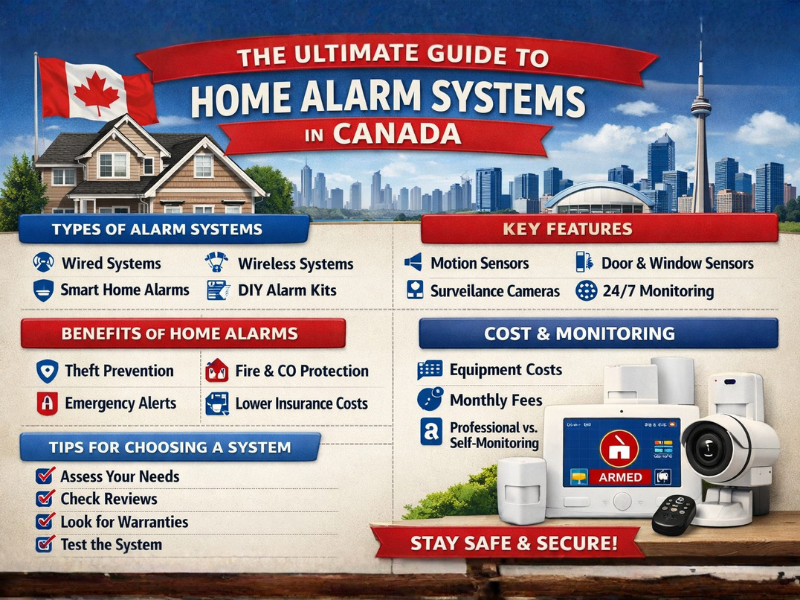
Top Home Security Companies in Canada: 2026 Rankings
The Canadian market is currently divided between multi-national telecom giants and specialized security firms. Based on reliability, customer support, and hardware quality, here are the top 5 providers this year.
1. Alarm Dealer (Best for Professional Installation & Expert Service)
Alarm Dealer has solidified its place as a top-tier choice for Canadians who value precision and personalized security. Unlike "big box" providers, Alarm Dealer focuses on high-grade hardware (like Alibi and Lorex) and professional calibration that eliminates the false alarms common in DIY kits.
Why it wins: They offer a "white-glove" experience, handling everything from the 5G signal check to the new 2026 Ontario CO law compliance.
Best For: Homeowners who want a commercial-grade system without the bureaucratic headaches of a telecom company.
2. TELUS SmartHome Security (Best for Internet Bundling)
Since acquiring ADT Canada, TELUS has become the largest player in the market.
Why it wins: If you are already a TELUS internet or mobile customer, their "bundle and save" plans are hard to beat. They utilize the Google Nest ecosystem, offering high-end AI features.
Points to Consider: Be prepared for long-term contracts (usually 3 years) and potentially long wait times for service calls.
3. Frontpoint (Best Professional DIY)
Frontpoint remains the leader for those who want a professional-grade system but prefer to stick to the sensors themselves.
Why it wins: Their "Crash & Smash" protection is legendary. Even if an intruder destroys the control panel, the alarm signal is sent to the monitoring station via cellular backup.
4. Ring Alarm (Best Budget DIY)
Owned by Amazon, Ring is the go-to for low-cost equipment and month-to-month monitoring.
Why it wins: Low upfront cost and seamless integration with Alexa. It is ideal for renters or small apartments.
5. Vivint Smart Home (Best for Premium Home Automation)
Vivint offers a sleek, high-end experience where your alarm, lights, locks, and car monitoring all live in one ecosystem.
Why it wins: Their "Smart Hub" is widely considered the best interface in the industry.
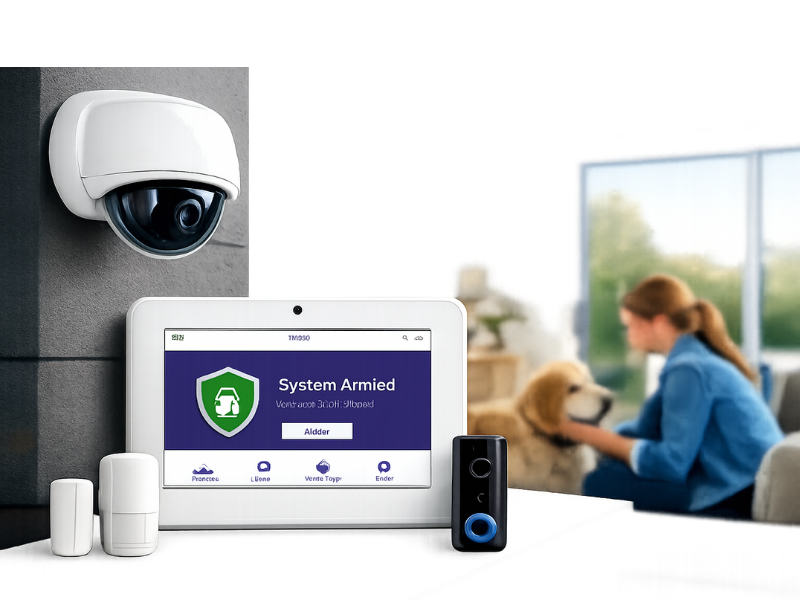
The Anatomy of a 2026 Security System
To understand what you are paying for, you must understand the hardware. In 2026, the technology has moved far beyond simple magnets and wires.
The Brain: The Central Hub
Your hub is no longer a plastic box hidden in a closet. In 2026, it is a 5G-enabled tablet that serves as your smart home command center. It must feature:
Essential Hub Features
- Dual-Path Communication: The system should use both your home Fiber/WiFi and a dedicated 5G cellular backup. If a thief cuts your internet line, the system doesn't skip a beat
- Matter & Thread Compatibility: This is the new universal language for smart homes. A Matter-compatible alarm can talk to your Philips Hue lights or Yale locks regardless of the brand
The Perimeter: 2026 Sensor Standards
Advanced Sensor Technology
- AI-Driven Motion Sensors: Old sensors were dumb—they looked for any heat change. Modern sensors at Alarm Dealer use AI to differentiate between a 60lb dog and a human intruder
- Vibration vs. Acoustic Glass Break: We now recommend acoustic sensors. They "listen" for the specific frequency of breaking glass, covering an entire 25ft room with one device, rather than needing a sensor on every window pane
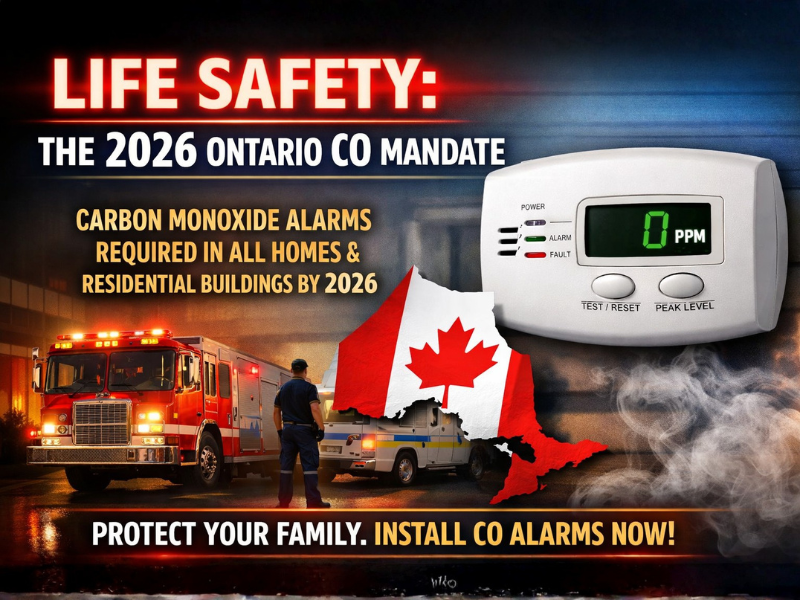
Life Safety: The 2026 Ontario CO Mandate
Important Legal Requirement
As of January 1, 2026, the Ontario Fire Code has been updated. It is now legally required to have a Carbon Monoxide (CO) alarm on every level of a home that contains a fuel-burning appliance, fireplace, or attached garage.
Pro Tip: Don't just buy a "beeping" alarm from a hardware store. A monitored CO sensor from Alarm Dealer will alert emergency services if levels rise while you are sleeping or away, potentially saving your pets and your property.
Professional Monitoring vs. Self-Monitoring
This is the most critical decision a Canadian homeowner makes. In 2026, the police response landscape has changed.
Professional Monitoring (The ULC Standard)
A "ULC-Certified" monitoring station is a secure facility where professionals watch your alarm 24/7.
Professional Monitoring Benefits
- Verification: Many Canadian cities now have "Verified Response" bylaws. This means police will not be dispatched unless a professional operator confirms a crime is in progress via video or audio
- Insurance: This is the only way to get the 20% home insurance discount provided by major Canadian insurers like Intact or Aviva
Self-Monitoring (The App Model)
You receive a notification on your phone and decide what to do.
Consider the Trade-offs
The Risk: If your phone is dead, you are in a meeting, or you are on a plane, your home is unprotected.
The Benefit: No monthly fees. This is popular for secondary cameras or low-risk areas.
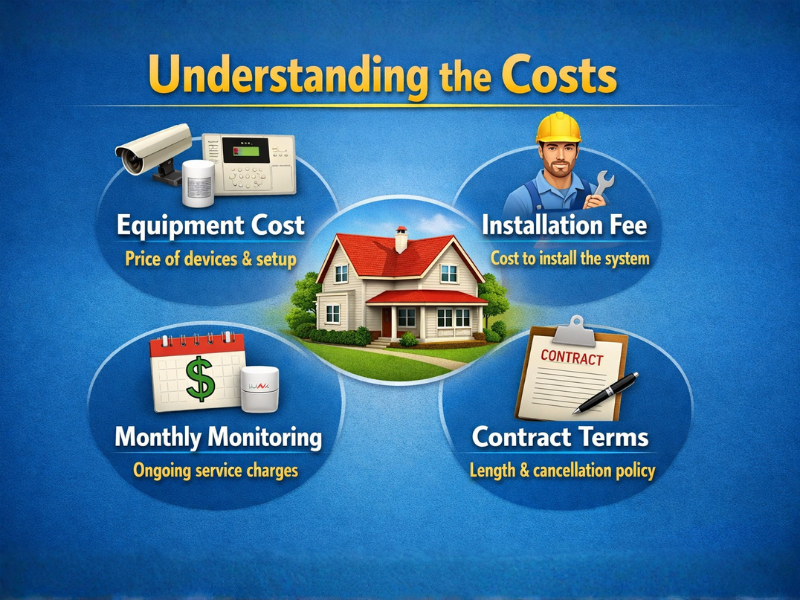
Understanding the Costs (2026 Price Guide)
Transparency is rare in this industry, but here are the current market averages for Canada in 2026.
| Cost Category | DIY / Basic | Professional (Alarm Dealer) | High-End (Vivint) |
|---|---|---|---|
| Equipment Cost | $200 – $400 | $600 – $1,200 | $1,500 – $3,000+ |
| Installation Fee | $0 | $99 – $199 | $199 – $299 |
| Monthly Monitoring | $10 – $30 | $35 – $55 | $60 – $90 |
| Contract Terms | Month-to-Month | Flexible / 24 Months | 36 – 60 Months |
Canadian Legal Compliance: Permits and Fines
Before you arm your system, you must check your local municipal bylaws.
Major City Requirements
- Toronto: Requires a permit for all monitored systems. False alarms result in a bill from the city
- Vancouver: Operates on a "Verified Response" model. They will not send a car for a single door-sensor trigger
- Calgary: Permits are required and must be renewed annually to ensure your "Police Dispatch" status remains active
Securing Your Future in 2026
The security landscape in Canada is more complex than ever, but it is also more effective. By moving away from basic "buzzers" and toward integrated AI life-safety systems, you are doing more than just protecting your belongings. You are protecting your family's peace of mind.
Don't settle for a one-size-fits-all kit from a giant corporation. Trust the local experts at Alarm Dealer to design a custom, 2026-compliant system that meets the unique demands of your property and the Canadian climate.
Contact Alarm Dealer today for a comprehensive 2026 security audit and ensure your home is both safe and legally sound!