


Alarm Systems: Types, Technology, and How They Work (2026 Guide)
In 2026, the concept of a home alarm system has undergone a fundamental transformation. We have moved beyond simple magnetic switches and loud sirens into the era of Proactive Intelligence. Today, a security system is no longer just a "burglar alarm"; it is a sophisticated, AI-driven ecosystem designed to predict threats, verify emergencies in real-time, and protect lives through advanced environmental sensing.
If you are looking to secure a property in Canada this year, understanding the intersection of hardware, connectivity, and artificial intelligence is essential. This guide provides a deep-dive into the types of systems available in 2026, the technology powering them, and the mechanics of how they keep your family safe.
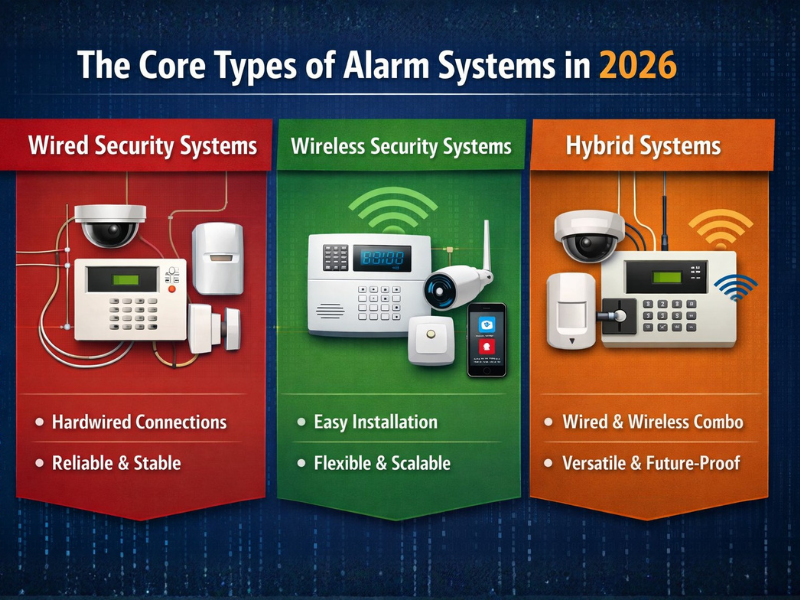
1. The Core Types of Alarm Systems in 2026
Modern security architecture is typically categorized by how it is installed and how it maintains its connection to the outside world.
Wired Security Systems (The Infrastructure Gold Standard)
Commonly found in new Canadian home builds, wired systems use physical copper or fiber cables to connect every sensor directly to the central control panel.
Key Advantages
- Reliability: Since they don't rely on radio frequencies, they are immune to signal jamming or local Wi-Fi interference
- Maintenance: These systems generally require less battery maintenance since power is supplied through the wires
- Best For: Large-scale residential estates and commercial properties where reliability is the primary concern
Wireless Security Systems (The Modern Standard)
Utilizing advanced protocols like Wi-Fi 6 and Matter-over-Thread, wireless systems are the most popular choice in 2026 due to their flexibility.
Modern Features
- Installation: Perfect for retrofitting older homes or for renters who cannot drill into walls
- Advanced Encryption: 2026 wireless standards utilize AES-256 bit encryption, making them virtually impossible for hackers to "spoof" or intercept
- Best For: Most Canadian households are looking for rapid deployment and seamless smart home integration
Hybrid Systems (The Best of Both Worlds)
A hybrid system utilizes a hardwired backbone for core entry points while allowing for wireless expansion. Leading installers often use these to "take over" an existing old-school wired system and add modern 2026 AI cameras and environmental sensors wirelessly.
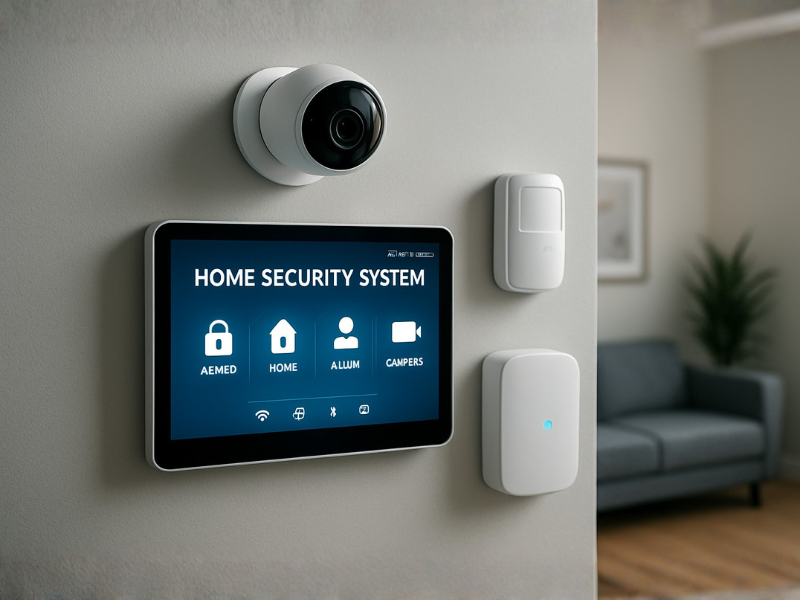
2. The 2026 Tech Stack: How Modern Security Thinks
To understand why a 2026 system is superior to those from even three years ago, we must look at the "Intelligence Layer."
The "Edge AI" Central Hub
In the past, alarm panels were simple processors. In 2026, the hub is a powerful Edge Computing device. Instead of sending all your private data to the cloud, the hub processes video and sensor data locally.
Edge Computing Benefits
- Instant Alerts: Threats are identified in milliseconds
- Privacy: Your video footage stays inside your home unless an actual alarm is triggered
- Bandwidth Efficiency: Your home Wi-Fi doesn't slow down because the "thinking" is done on the device, not the internet
Agentic AI & Behavioral Sensors
The most significant breakthrough this year is Behavioral Authentication. Modern motion sensors no longer just look for "heat signatures." Using a combination of Passive Infrared (PIR) and Computer Vision (CV), they can distinguish between:
- A pet moving in the living room
- A robot vacuum cleaner
- A human loitering with suspicious intent
The "Matter" Universal Protocol
2026 is the year that "brand silos" died. Thanks to the Matter protocol, your security system can now natively communicate with smart locks, lighting, and HVAC systems from different manufacturers. If your alarm detects a fire, it can automatically unlock all doors, turn on exterior floodlights, and shut down the furnace to prevent the spread of smoke.
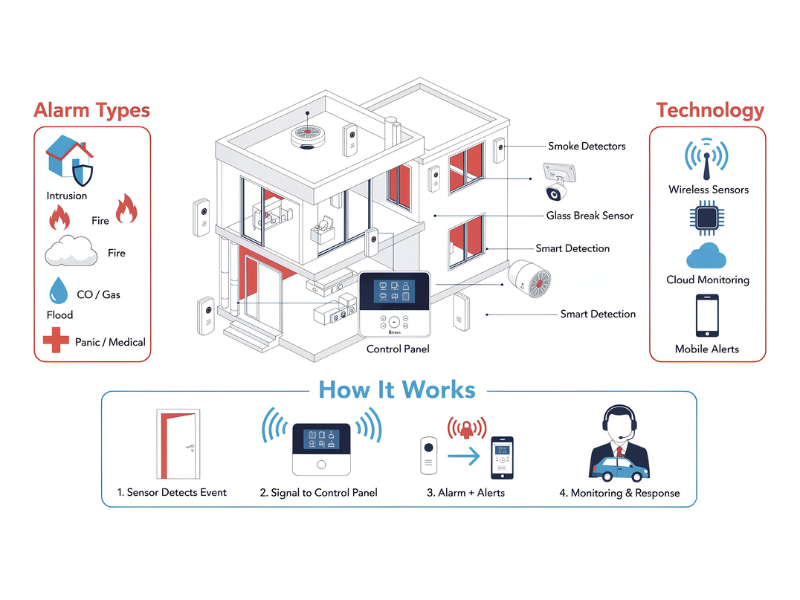
3. How It Works: The Layered Defense Workflow
A modern system follows a four-stage process to ensure that help arrives when you need it and that you aren't fined for false alarms.
Stage 1: Multi-Sensor Detection
When an event occurs (such as a window being forced open), the system cross-references multiple data points. It checks the door contact sensor, the acoustic glass-break sensor, and the nearest AI camera simultaneously.
Stage 2: Verification (The 2026 Standard)
To comply with "Verified Response" bylaws in major Canadian cities, the system must confirm the threat. The hub uses AI to verify that a human is indeed present. If you have Professional Monitoring, a ULC-certified operator receives a 10-second "verification clip" to confirm a crime is in progress.
Stage 3: Proactive Deterrence
Before a burglar even enters, 2026 systems take action. The system can flash red/blue LED strobes on your cameras or play a pre-recorded voice message: "You are being recorded. Police have been notified." This proactive approach prevents 70% of break-ins before they happen.
Stage 4: Redundant Transmission
The alert is sent via Dual-Path Communication. It primarily uses your high-speed home internet but switches instantly to a dedicated 5G Cellular Backup if the power is out or the lines are cut.
4. Life Safety: Beyond Burglary
In Canada, environmental hazards are often a greater threat than intruders. A 2026 security setup is incomplete without:
Essential Life Safety Components
- Monitored Smoke & CO Detectors: Crucial for meeting the January 2026 Ontario Fire Code updates requiring CO detection on every floor
- Flood & Freeze Sensors: These monitor for pipe bursts in Canadian winters, potentially saving you tens of thousands in property damage
- Smart Water Shut-off: If a leak is detected, the system can automatically turn off your main water line

Ready to Upgrade to 2026 Security?
Selecting the right alarm system in 2026 is about finding the perfect balance between high-tech AI capabilities and the reliability required by the harsh Canadian climate. While DIY kits offer a basic level of protection, they often lack the "Life Safety" certification and the professional calibration needed to avoid municipal fines and ensure a rapid police response.
At Alarm Dealer, we specialize in bridging that gap. Our team of expert installers provides the white-glove service and local Canadian expertise required to turn a simple alarm into a bulletproof security ecosystem. Contact Alarm Dealer today for a free 2026 security audit and take the first step toward true peace of mind.